
Understanding Hair loss- different types, causes and treatments
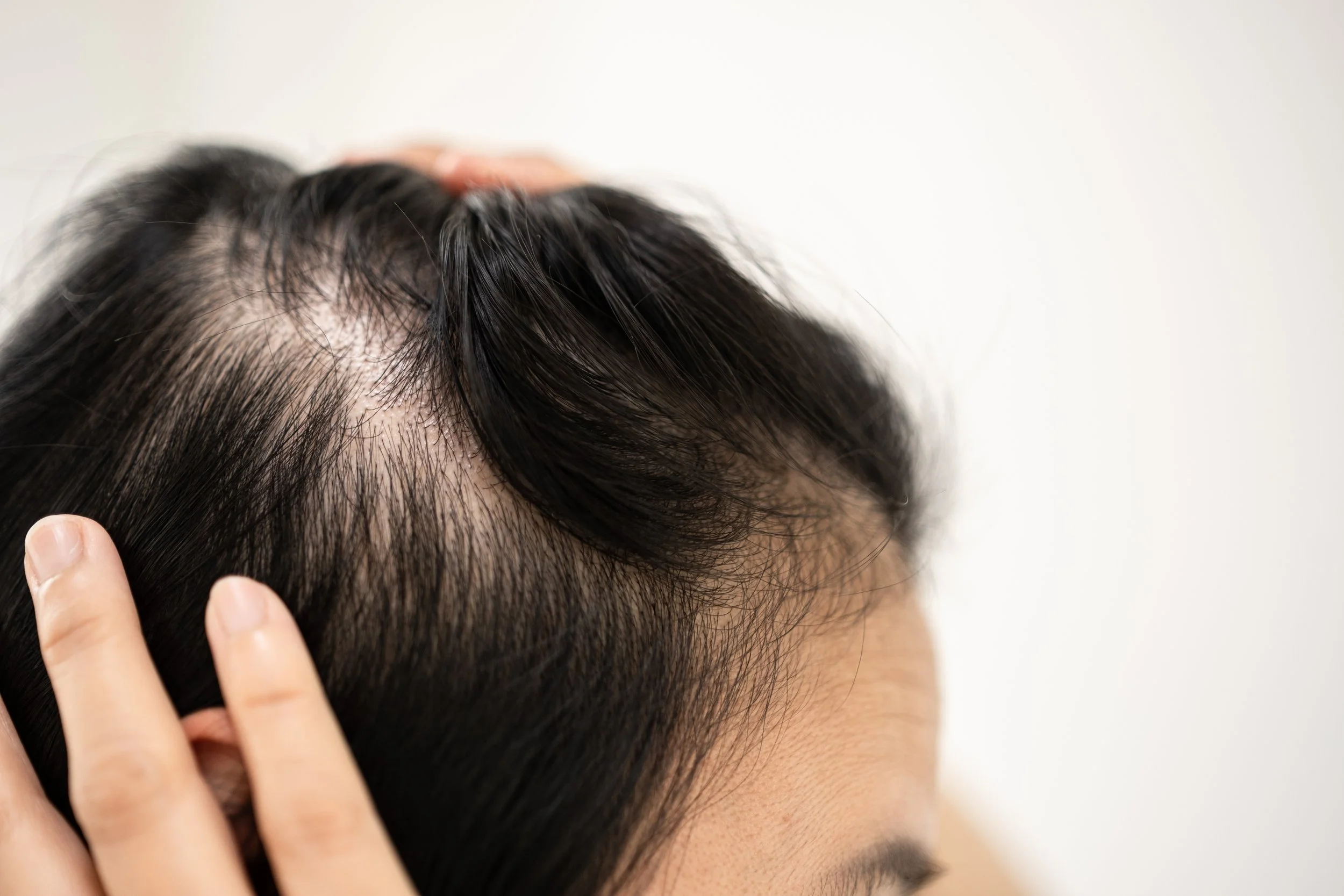
Androgenic Alopcia
Androgenetic alopecia affects people of all genders and is commonly referred to as “pattern hair loss.” It’s driven by hormonal changes, particularly sensitivity to dihydrotestosterone (DHT) and genetics.
Common signs:
Gradual thinning at the crown or hairline
Widening part
Shorter, finer hair over time
Treatment options:
Topical or oral minoxidil
Hormonal support (when appropriate, under medical guidance)
Low-level light therapy
Regenerative treatments such as PRP or stem cell therapy
Alopecia Areata
Cause: Autoimmune condition
Alopecia areata occurs when the immune system mistakenly attacks hair follicles, resulting in patchy hair loss on the scalp, face, or body. The follicles remain alive, which means regrowth is possible.
Treatment options:
Topical or injected corticosteroids
Minoxidil
Light therapy
Immunotherapy (in more advanced cases)
Alopecia Totalis
Cause: Autoimmune disorder
Alopecia totalis is a more advanced form of alopecia areata, resulting in complete scalp hair loss. It may or may not begin as patchy alopecia areata.
Additional signs may include:
Brittle or pitted fingernails
Treatment options:
Light therapy
Topical treatments such as minoxidil or diphencyprone
Corticosteroids
JAK inhibitors, such as tofacitinib (originally developed for arthritis)Scarring Alopecia (Cicatricial Alopecia)
Cause: Inflammation that permanently destroys hair follicles
Scarring alopecia occurs when hair follicles are damaged and replaced with scar tissue. This type of hair loss is often permanent, making early diagnosis critical.
Potential causes include:
Frontal fibrosing alopecia typically begins at the front hairline and gradually moves backward. It can also affect eyebrows and body hair.
Treatment options:
Anti-inflammatory medications
Topical treatmentsCauses
Autoimmune disorders
Infections
Chemical damage
Burns or traumaTreatment focus:
Stopping progression
Reducing inflammation
Preserving remaining hair
Frontal Fibrosing AlopeciaCause:
A subtype of scarring alopecia, often autoimmune-related
Early medical intervention to slow progression
Traction Alopecia
Cause: Repeated tension on the hair
Traction alopecia is caused by consistent pulling on the hair from tight hairstyles such as braids, ponytails, extensions, or locs.
Key signs:
Thinning around the hairline or temples
Tenderness or scalp irritation
Treatment options:
Eliminating tight styles
Gentle hair care practices
Early intervention to allow regrowth before follicles are permanently damaged
Tinea Capitis (Scalp Ringworm)
Cause: Fungal infection
Tinea capitis is a contagious fungal infection of the scalp that causes patchy hair loss, redness, inflammation, and sometimes scaling.
Treatment options:
Prescription oral antifungal medication
Medicated shampoos
Prompt treatment to prevent scarring
Trichotillomania
Cause: Mental health condition
Trichotillomania is characterized by a compulsive urge to pull out hair, often as a response to stress or anxiety.
Treatment options:
Behavioral therapy
Mental health support
Gentle hair restoration strategies once pulling behavior is addressed
Why Diagnosis Matters
Hair loss is not just cosmetic, it’s often a signal from the body. Treating the wrong type of hair loss can waste time, money, and energy. A professional assessment with atrichologist or dermatologist helps identify the root cause and create a plan that supports both scalp health and long-term regrowth where possible.
If you’re experiencing hair loss, early intervention makes a meaningful difference. If you would like to treat the symptoms of hairloss we can help you. We offer hair replacement systems, such as mesh and meshless integration as well as scalp prosthesis and Calecim stem cell therapy treatments. Book a consultation to learn more.
